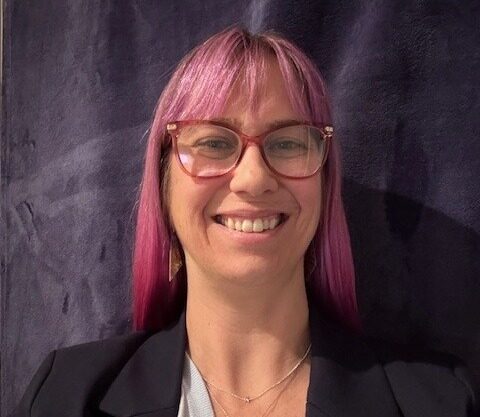
Kristen Kelly
Senior Interiors Project ManagerOregon Health and Science UniversityKristen Kelly, BFA, has nearly 30 years of combined experience related to interior design, project management and team leadership. She is currently a Senior Interiors Project Manager in the Department of Design and Construction at Oregon Health & Science University (OHSU) where she helped establish the interiors team and lead it in early years. She is a subject matter expert for scope involving art, finishes, furniture and signage, and most recently completed work on the new cancer hospital.
E22 – A Community Imprint Approach to Healthcare Design
How can healthcare environments be both universally healing and deeply reflective of the communities they serve? This session explores a community-imp
…How can healthcare environments be both universally healing and deeply reflective of the communities they serve? This session explores a community-imprint approach to healthcare design developed for the new Vista Pavilion at Oregon Health and Science
…How can healthcare environments be both universally healing and deeply reflective of the communities they serve? This session explores a community-imprint approach to healthcare design developed for the new Vista Pavilion at Oregon Health and Science University in Portland, Oregon. OHSU’s executive leadership challenged the project team to create a bespoke yet inclusive environment that reflects the identity of place, elevates under-represented v
…How can healthcare environments be both universally healing and deeply reflective of the communities they serve? This session explores a community-imprint approach to healthcare design developed for the new Vista Pavilion at Oregon Health and Science University in Portland, Oregon. OHSU’s executive leadership challenged the project team to create a bespoke yet inclusive environment that reflects the identity of place, elevates under-represented voices, and demonstrates the University’s commitment to the greater community and advancement of care.
Moving beyond traditional community engagement, the team incorporated design equity principles, evidence-based strategies and brain science to create a rigorous, repeatable framework for gathering valuable insights through surveys, mock-ups, and multiple feedback forums with patients, caregivers, and researchers. These insights directly shaped the space program, layout, operations, and aesthetic, ensuring the environment felt welcoming, safe, and restorative.
The result, validated through post-occupancy evaluations, demonstrates how authentic community voice can drive organizational value and meaningful outcomes that benefit all. Attendees will learn practical strategies for embedding equity, research, and community insight into healthcare design to create environments that truly reflect the people they serve.
Show MoreClick the title to see all detailsShow More



E32 – Design That Works: Art, Light, and Space to Activate Movement in Care Delivery
Healthcare environments often include art, daylight, & views of nature, yet these elements are rarely operationalized as a systematic part of pati
…Healthcare environments often include art, daylight, & views of nature, yet these elements are rarely operationalized as a systematic part of patient treatment or staff workflows. It is also commonly assumed that such interventions have universal
…Healthcare environments often include art, daylight, & views of nature, yet these elements are rarely operationalized as a systematic part of patient treatment or staff workflows. It is also commonly assumed that such interventions have universal positive impacts across patient populations. This multi-site, multi-population, comparative post-occupancy study reframes design interventions as active clinical systems - design as care plan.
Compa
…Healthcare environments often include art, daylight, & views of nature, yet these elements are rarely operationalized as a systematic part of patient treatment or staff workflows. It is also commonly assumed that such interventions have universal positive impacts across patient populations. This multi-site, multi-population, comparative post-occupancy study reframes design interventions as active clinical systems - design as care plan.
Comparing existing medical and surgical oncology units with new inpatient units at Oregon Health and Science University, the study uses a mixed-methods approach to study patients and interdisciplinary staff, using observation, focus groups and surveys, movement tracking, & space syntax analysis.
Rather than focusing solely on reactions to design features, the research examines how different populations strategically use the environment when staff are trained to deploy space as a clinical tool. High-impact interventions, including full-scale commissioned murals, full-height window walls, community-building social and activity spaces, & visitor support and respite spaces, inspire motivation, ambulation, autonomy, & recovery.
Unlike conventional POEs which validate design intent, these findings will translate directly into staff training modules and treatment protocols, evaluating transferability across patient populations. For healthcare designers and operators, this work offers a measurable, scalable model for activating design to improve outcomes, experience, & performance, moving beyond validation toward transformation.
Show MoreClick the title to see all detailsShow More